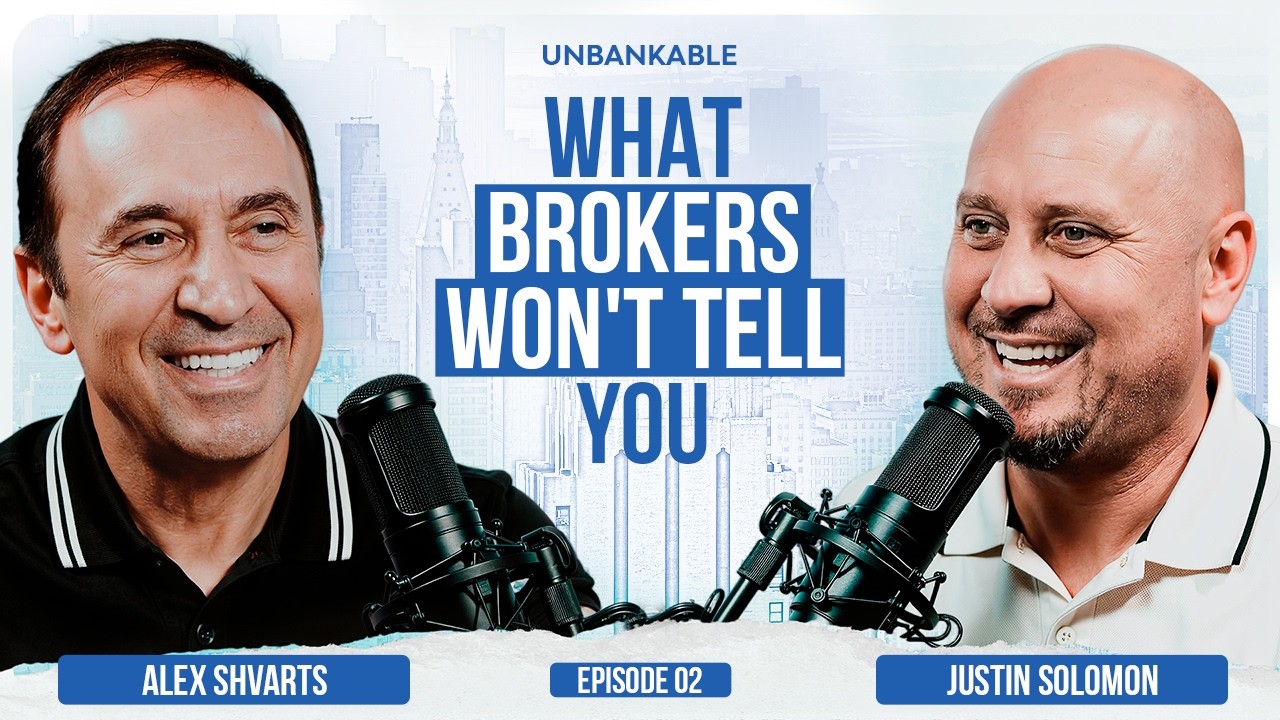
Real entrepreneurship is about building something durable and surviving pressure, not looking successful. Alex Shvarts talks with operator Sache B about systems, hiring, discipline and spotting BS.
Welcome to Unbankable, the podcast for entrepreneurs who won’t take no for an answer. I’m Alex Shvarts. My guest is Sachi, a multi-industry operator and systems architect in Miami. He started doing manual labor at 18, now runs Leveled Up (a software and systems firm for mid-market companies), and works with a sell-side M&A advisory helping founders maximize their exits. Across his ventures he has hired more than 700 people, and he’s here to talk about the fundamentals that actually drive business.
On ‘no’: Sachi’s came from negotiating bottom factory pricing in import-export. He treats a no as a prompt to find the win-win, the road map where his desired outcome also works for the other side. He likes clear targets and isn’t afraid to push to hit them. As for following a roadmap, he says he never saw the road, his mother raised him with independence and never told him how to be, so he built his own path and has been on it ever since.
On discipline: growing up in Lexington, South Carolina, his family was in construction. The 2008 recession hit them hard, after a great year they lost three houses and five cars and he ended up on free lunch. That struggle made him the strict financial partner who questions every unnecessary expense and does the math on credit terms. He believes the struggles, not the wins, are what teach you.
He was an entrepreneur from the start. His first job was laying commercial flooring with his family at 14 for $10 an hour, though it took two years before he asked ‘where’s my money?’ By 21 he was making around $400,000 a year with 60 employees while sitting in college orientation next to nervous 18-year-olds, and he realized formal school wasn’t for him. He distinguishes shortcuts (skipping what you need to do) from finding a smarter, minimum-viable way to reach the same result faster.
On confidence: Sachi argues the number-one killer is overconfidence, and that high confidence done right should model self-belief for others. He recognized his gift early, in second grade he solved math his own way and got the right answers even when a teacher said he was doing it wrong, which taught him to question authority that doesn’t make sense.
His memorable line: ‘I have a very tall wall for BS and a very easy-to-open gate for when things are actually true.’ He credits pattern recognition. He warns that expectation is the root of much suffering, because we assume we control how things will go. His advice: keep your eye on the goal but don’t be married to it, stay flexible on the details, and don’t let attachment to a vision (or to a loyal person in the wrong role) blind you to the variables that will stop you.
I added my own version: trust your gut and follow your heart, because your gut and heart signal whether something is right faster than your brain, which reacts to learned behavior and tries to protect you. The same applies in sales and closing, you sense the right or wrong path quickly, and people should rely more on how they read a situation than on a memorized script.
On what he’s building now: having scaled a people-heavy construction business in South Carolina full of lower-paid employees, Sachi developed deep skills in hiring, logistics, and especially systems. Moving to Miami, he saw young founders running large startups with tiny teams and wanted in, so he taught himself software development by hiring developers and diving into the process. He loves the messy 0-to-60 startup phase and now brings that experience to help founders in their first year.
On communication: Sachi cautioned against verbal cues like ‘to be honest’ or ‘to tell you the truth,’ which can imply everything else wasn’t. Everything out of your mouth should matter. His broader point, delivered with characteristic conviction, is that language only ever approximates the billions of feelings we try to relay, and the same word means something different to each listener. I noted his real gift: he speaks with such conviction that people believe him, a powerful sales asset, though for some buyers a delivery that’s too smooth can erode trust, so the gift works differently for different people.
On his low social media presence: Sachi sees social media as a great platform with the right intention, but also as a crutch for external validation. He believes the real work happens person to person, not on a screen, and he protects the purity of his intentions by not chasing mass validation. His network comes from real-life experiences, projects, and travel, and he argues even big names ultimately want genuine person-to-person connection over the noise.
On spotting hype and BS, especially in flashy Miami: if it’s too good to be true, it is. If a market is all over social media and people are selling courses on it, it’s probably matured, the operators have moved from doing it to teaching it. He’s skeptical of course and seminar sellers (Elon, Bezos, and Gates aren’t selling courses; if you have a big real estate portfolio you don’t have time for one-on-one coaching). There’s rarely good fast money, you’ll put in the work either way, so pick the path your gut actually wants.
I reinforced it: the most successful people I’ve met don’t flash money or run flashy social accounts, they’re working, and many drive Camrys, not Ferraris. So when you see someone flashing wealth online, it’s often the opposite of real success. We agreed you don’t need a million hustles, you need one you’re naturally inclined toward and happy to commit to long term.
On financial discipline as an entrepreneur: there are always ebbs and flows, a political shift, a supply-chain slowdown, a slow season, and if you haven’t stashed funds for the winter because you wanted the Porsche, you can jeopardize five years of hard work. There’s nothing wrong with wanting nice things; it’s about balance and reserves.
On hiring and firing: hire people who reciprocate the energy you invest and are eager to learn and build, not just those who want a job. Give A-players a fair comp plan with a real road map to earn more, proportional to the revenue they generate, otherwise you’ll lose your top performers. On firing: don’t avoid it out of attachment to the ‘family’ of the business. If someone isn’t fit for a role, they usually know and are suffering in it, so you can set them both free, with honesty and care, and even help them find a better-suited job.
On scale and ‘enough’: the goal isn’t a linear march to a billion dollars, it’s to stay in business, pour capital into your people and systems, and keep doubling down until you grow into it. He looks for industries where he can earn 80% of the revenue for 20% of the work, because that creates scalability. ‘Enough’ is relative, $14 million is wealthy in small-town South Carolina and modest in Miami, but he loves staying uncomfortable, because that’s where growth and the fun happen. As I put it, there are no losers, only quitters; be happy for what you have, do your best at your goals, and don’t give up.