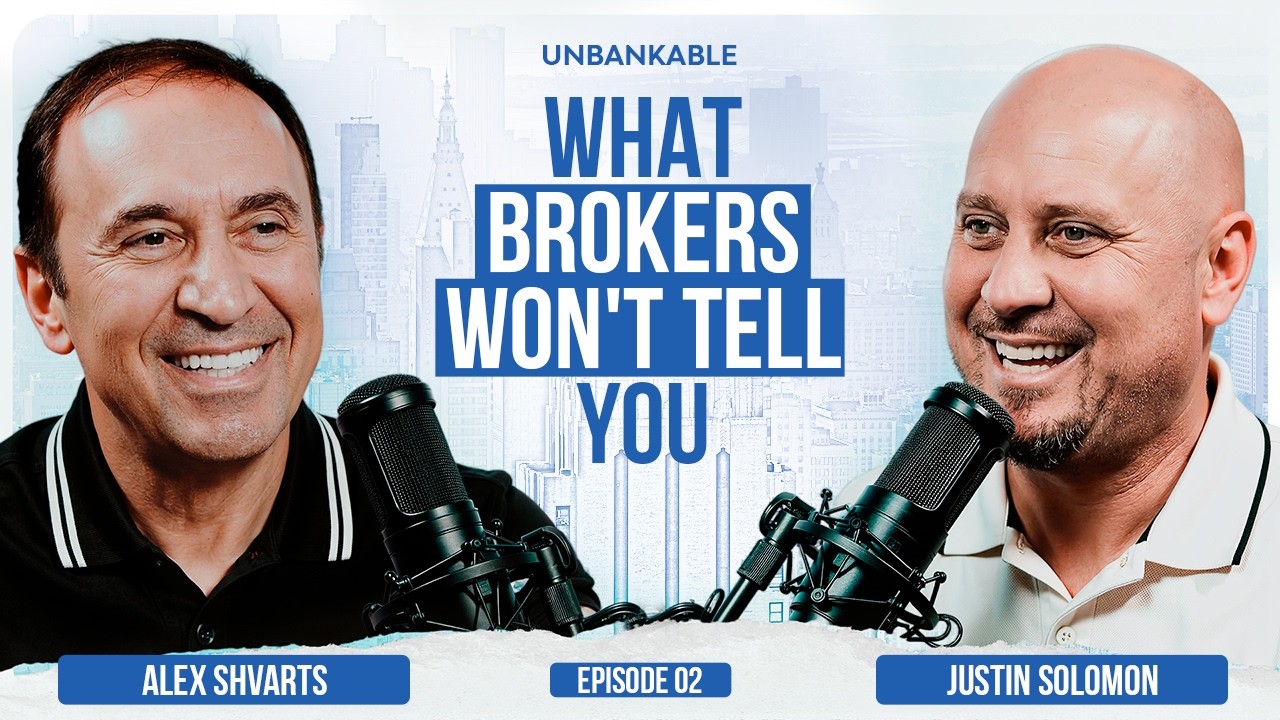
The sale doesn’t start until you hear ‘no’. Alex Shvarts and CRO Justin Solomon talk sales, funding mistakes, and why desperation destroys your negotiating power when raising capital.
Welcome to Unbankable, the podcast for entrepreneurs who won’t take no for an answer. I’m Alex Shvarts, CEO and founder of FundKite. My guest is Justin Solomon, FundKite’s Chief Revenue Officer, a disciplined, organized operator who knows sales, people, and how to manage teams. We get into the craft of selling and the realities of business funding.
On advice he wishes he’d taken: Justin was naturally talented at phone sales from age 21 but didn’t treat it as a craft to master until his late 20s or early 30s. He wishes he’d taken it seriously and honed it sooner. We agreed sales is partly DNA, it can’t be forced, it has to flow naturally, and two of the most important skills are listening and being able to accept ‘no.’
On ‘no’: if you can’t accept no, you shouldn’t be in sales; handling it is conditioning, a marathon not a sprint. Justin’s key line: ‘The sale doesn’t start until you hear no.’ If there’s no resistance, you’re just order-taking, the buyer isn’t serious, or you haven’t surfaced the real objections. On seminars, he’s skeptical, you might pick up something useful, but he wouldn’t pay to emulate people whose main skill is selling seminars rather than mastering sales.
On selling versus closing: Justin (only half-jokingly cocky) calls himself a master salesman, because you can’t sell without believing you’re the best. His philosophy: ‘I don’t sell, I attract.’ Selling implies desperation; instead you have a credible conversation, you sound credible because you are, and you stay in control while drawing the person from A to Z rather than pushing. As a 47-year-old entrepreneur, he considers himself the ideal customer: the moment he feels he’s being sold, the conversation is over.
We both hate being attacked the second we walk into a store (‘Can I help you? What are you looking for?’), it makes you want to leave. The lesson for owners: train front-facing staff to be warmly welcoming, not to bombard. I argued that when someone has chosen to walk into your store, a simple ‘good afternoon, let me know if I can help’ and space works better, because if something appeals to them they’ll engage; on the phone, where you must qualify fast, you ask more directly.
On scripts: they don’t work, because saying the same thing to everyone gets one result, failure. You should know your product’s key points cold, but everyone is unique. The biggest failing Justin sees is salespeople who don’t listen, they just talk. His restaurant analogy: a waiter who recommends thirty dishes isn’t listening; a great one asks ‘how hungry are you?’ and gives one perfect suggestion. The skill is like leading a witness in court, asking questions you already know the answer to, to guide the person from point A to point B.
On what surprised him about business owners: how many, maybe 90%, are clueless about finance and money decisions. But that’s not a flaw, a great chef or mechanic built their business on a different talent. The key is recognizing your strengths and weaknesses and getting help. Justin’s framework: know what you know, know what you don’t know, and accept that there are things you don’t even know you don’t know.
I added the caution: naivety is fine until you run into someone unscrupulous, and too often business owners hit the wrong person first. Justin’s three tips for choosing a broker: do a simple Google check, avoid anyone overly pushy (urgency you didn’t initiate is a red flag, trust your gut), and value people who don’t treat every interaction as transactional. I added: give yourself a few minutes to replay the conversation and make sure you understand the terms, because it’s easy to take money, the real question is whether you can pay it back and what happens if you miss a payment.
On the most uncomfortable conversation: telling someone deep in the process, often at the 9th hour, that they won’t get funded, especially when they desperately need it and it’s nobody’s fault. Since much of this funding is unsecured, unforeseen things surface late, and letting down someone who’s counting on you is the toughest part of the job.
On the biggest mistake applying for funding: doing it on your back foot, desperate and unprepared, instead of when you best qualify. Unprepared owners take shortcuts, don’t have financials or taxes in order, and never get as good a deal. Plan ahead so you’re in a position of power dictating terms, not desperation. And in a real emergency, be transparent about it, don’t sugarcoat, because funders need the clear picture. Justin tells people he’s not your spouse’s attorney or the IRS, you can’t lie, like lying to your doctor or lawyer; honesty up front lets a good professional navigate almost anything.
On why owners hide trouble: admitting you’re in trouble feels like admitting failure, and people won’t even admit it to themselves. But everything you say about money and business is verifiable through bank statements and numbers, so transparency only helps.
On a career in business funding: it’s a booming, almost gold-rush industry with a low barrier to entry, you can make real money with no college degree if you show up on time and work. Justin’s advice to young people: choose a company that trains you the right way, because many places pay no salary and the best thing you’ll get early on is an education, sometimes in what not to do. He built his income on sales fundamentals he learned decades ago that still apply, then plugs in everything else.
On the future of the industry: Justin pointed to consolidation, the big, high-tech, data-driven players are thriving and squeezing out the ‘cowboys’ who hurt people. He sees it heading toward embedded lending like Shopify Capital, where the platform already has all the transaction data. I agreed tech will automate the part where the data is available, but where it isn’t, you still need a hands-on approach to gather financials, which is why FundKite’s boutique, conversational style still matters and the bad apples are filtering out.
On why people hate asking for money: it’s one of the hardest conversations there is, and banks have programmed us that money is transactional with no one to talk to, ATMs, chatbots, no personal banker like there used to be. They’ll call when you’re late or approve you when your credit is perfect, but when you don’t fit the box and need money now, there’s nowhere to turn, which is exactly the problem FundKite solves for the unbankable.
On reading business owners: be honest and specific, like telling a doctor exactly where it hurts rather than ‘something hurts.’ Justin and I are both skeptical of the too-rosy pitch, when everything sounds perfect, you wonder why they need money. Entrepreneurs are optimists, which is good, but I shared a conversation with a founder launching 15 products who described the dream over and over without a single step of the plan, the market, or the rollout. If I hear only the win and none of the plays to get there, I’m concerned: not having a plan is a plan to fail, and the same goes for reckless hypergrowth.
We closed on time, productivity, and burnout: people think they have more time than they do, and if you don’t prioritize time to recharge, you can’t offer much to your business, family, or anyone. As a founder you sacrifice and everyone looks to you as the captain, but it’s about productivity, not hours, Justin argued he’s more productive in four hours than most are in eight. Protect your good employees from burnout too. And the best way a day can end? Funding deals, because making money and helping owners solves the day’s problems.